What's in the Glass Says Where You Are: Building a Blyth Night Out on Local Pours
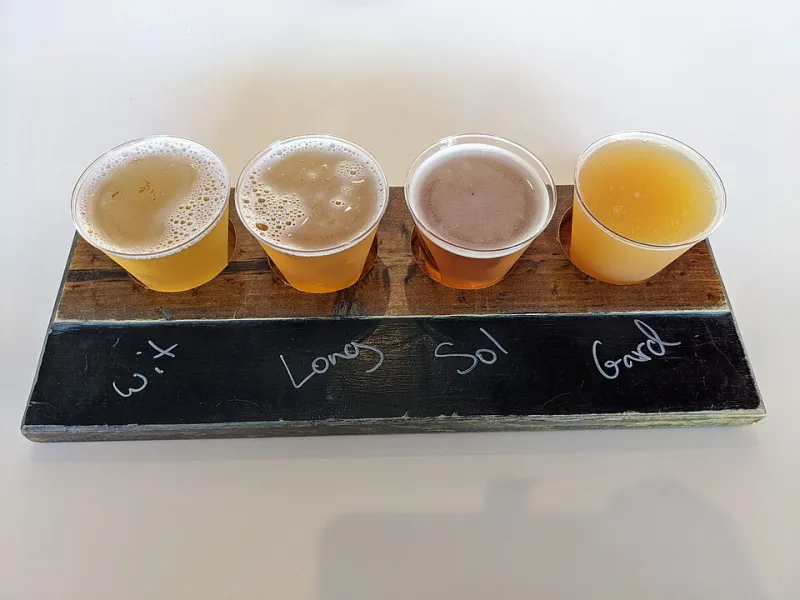
Photo: The ed17, CC BY-SA 4.0, via Wikimedia Commons
There's a moment on a good night out when the glass in your hand tells you exactly where you are. Not the label, necessarily — the feeling. A sharp coastal wind outside, a warm room inside, and something in the glass that couldn't have come from a thousand other high streets. That's the local pour doing its quiet work.
Blyth has never been short of character. It's a town shaped by the river, the port and the North Sea, with a social life that has always been practical, warm and a bit weatherproof. So it's odd that so many bar menus still default to the same national brands — the same lagers, the same gins, the same soft drinks — as if the town's taste buds were an afterthought. A bar can do better. A night out can do better. And it doesn't take a revolution; it takes a few deliberate choices at the bar.
The glass as a postcode
When you choose a North East spirit, a regional ale or a soft drink made a few miles away, you're not just buying a drink. You're buying a bit of the place. The barley, the water, the botanicals, the person who decided to give it a go — all of that travels with the bottle. It makes the night feel rooted. It gives you something to talk about that isn't the weather or the match. And for anyone visiting Blyth, it's a far better souvenir than a generic pint they could have had at home.
This isn't about being worthy or turning a night out into a geography lesson. It's about pleasure. Local pours tend to have a bit more edge and personality because they're made by smaller teams who can afford to take a view. They're not designed by committee to offend nobody. That's exactly what you want when you're settling in for the evening.
Why default brands win — and why they shouldn't
Default brands win for boring reasons: they're familiar, they're heavily marketed, and they're easy to stock. Nobody's arguing that a well-known lager has no place on a bar. But when the whole list looks like a supermarket shelf, something goes missing. The night out starts to feel like a transaction rather than an occasion.
A local bar should taste like the town it sits in. Not every single item, and not in a forced way — but enough that the menu has a point of view. If you run a bar in Blyth, you have a ready-made story: the coast, the river, the working port, the people who've stayed and the people who've come back. Local drinks fit that story without having to try.
A simple way in: the three-glass flight
The easiest way to champion local pours without overwhelming anyone is a short flight. Three small measures, served together, with a sentence of explanation from the bar. Not a lecture — just a bit of context. Something like:
- A North East gin, served simply with tonic and a coastal garnish — think rosemary, sea salt or a strip of citrus.
- A regional pale ale or amber, chosen for drinkability rather than shock value.
- A soft drink from a nearby maker, so the designated driver or the non-drinker gets the same sense of place.
Call it a Blyth flight, a local three, a taste of the North East — whatever fits the room. The point is that it's low-effort for the customer and high-reward for the bar. It gives people a reason to try something new without committing to a full pint of something they might not love.
The house serve that earns its place
Every bar worth its salt should have a house serve that feels like it belongs to the building. For a Blyth bar, that could be a local gin with a North East tonic, a twist of grapefruit and a sprig of something grown or foraged nearby. Or a dark and stormy built on a regional rum, if you can find one, with a ginger beer that bites back. Or simply a local ale served in the right glass at the right temperature, with a bit of care.
The house serve doesn't need to be complicated. It needs to be consistent, well-made and clearly local. When someone asks 'what's good?', the answer should be something the bar is proud of, not something the brewery paid to put on a pump clip.
Soft drinks count too
Too often, the local conversation stops at alcohol. But a night out is a shared experience, and the non-drinkers, drivers and light drinkers deserve better than a lukewarm cola. North East soft drinks makers — from traditional cordials to small-batch ginger beers — give the bar a chance to make every glass feel considered. It's a small change that makes a big difference to how inclusive the room feels.
A night out with a sense of place
None of this means turning the bar into a museum of local produce. It means tilting the balance. A few local lines on the bar, a short flight on the menu, a house serve with a story, and a soft drink that isn't an afterthought. That's enough to make a night out in Blyth feel like it could only be happening in Blyth.
The best bars are the ones that feel like they've grown out of the pavement outside. The glass is a good place to start. So next time you're in, ask what's local. Try the flight. Order the house serve. Let the drink tell you where you are — and enjoy the fact that the answer is here.