The Quiet Queue: Getting Served at a Busy Blyth Bar Without the Theatre
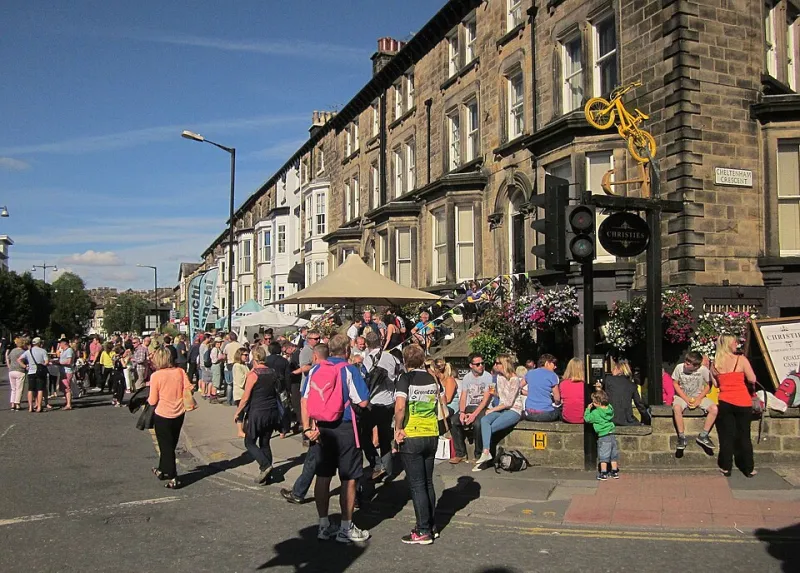
Photo: Derek Harper , CC BY-SA 2.0, via Wikimedia Commons
A busy bar is not just a room with drinks in it. It is a small system of moving parts: staff reading the next order, customers finding a spot, glasses going out, empties coming back, and a route to the table that somehow has to stay open while everyone pretends it is not tight. At Bar 38 on a properly busy night, the difference between a smooth round and a scrum is rarely down to who shouted first. It is down to who made themselves easy to serve.
The bar has its own traffic rules
Walk into a packed Blyth bar at nine o'clock on a Friday and you can feel the difference between a queue and a crowd. A queue has a shape. A crowd has elbows. The trick is to join the shape, even when nobody has drawn it.
That usually means standing at the bar with a bit of purpose: menu down if you have one, card or cash ready, order formed, and your place in the sequence understood. It does not mean leaning over the counter like you are hailing a taxi. Staff are looking. They are almost certainly busier than they look. The raised tenner, the long arm, the repeated "mate" – these are not secret signals. They are just noise.
Read the room before you read the board
Busy nights at Bar 38 tend to have two speeds. There are the quick orders – a couple of pints, a lime and soda, something from the fridge – and the slower ones that involve shaking, stirring, muddling or a cocktail list that suddenly looks much longer when there are four people behind you.
Neither is a problem. The problem is pretending they take the same amount of time. If your round is five different cocktails at peak hour, expect to wait a little longer, and consider whether it is kinder to split the order. If you are still deciding what you want, step back from the serving hatch and let someone who is ready go ahead. That single move saves more time than any amount of eye contact.
The order is the whole conversation
When it is your turn, the most useful thing you can bring to the bar is a complete sentence. "Two pints of the lager, one house red, and a packet of crisps" is a beautiful thing. "Er, what was that one? Can I get… actually, no, what's that other one?" is not, especially when the bar is three deep.
Know what you want before you get there. If you are ordering for a group, know the group's order. If someone has asked for "something dark" or "a nice gin", get them to be more specific before you leave the table, not while a member of staff is waiting. And if you are splitting the bill, say so at the start. Not after every drink has been poured and the card machine is hovering.
Space is the currency
The greatest courtesy at a busy bar is not a please or a thank you, although both help. It is space. The bit of counter where drinks are handed over is not a place to settle in for a chat. It is a working surface. Once your drinks are in hand, move away. If you are waiting for friends, wait to the side. If your bag is on the floor, move it out of the walkway. If you are tall, do not stand directly in front of the hand-pull clips while deciding.
At Bar 38, the room works best when people treat the bar like a pavement rather than a parking space. Keep the route clear, and everyone – staff and customers alike – gets where they are going faster.
The tenner wave and other myths
Waving a note does not make a person appear sooner. Neither does leaning across the bar, clicking fingers, or calling out "mate" every forty-five seconds. Staff can see you. They are not ignoring you; they are working through a sequence that exists mostly in their heads and partly in the tilt of a glass.
If you genuinely think you have been missed, wait for a gap and say something calm: "When you've got a sec, no rush." That works. Complaining about the queue to the person serving you does not. They are in the queue too, just from the other side.
The hand-off and the route back
Carrying four pints is a skill, and not one to attempt while turning quickly. If you have a big round, ask for a tray or make two trips. Know your route back to the table before you set off. Do not spin round from the bar into the person behind you. Do not stop dead in the middle of the floor to hand out drinks one by one while a queue forms behind you. Move clear, then distribute.
Small things, but they are the difference between a bar that feels lively and a bar that feels like an obstacle course.
The ripple effect
A busy bar is a shared space, and every small courtesy ripples. The person who steps aside for someone who is ready keeps the queue moving. The person who orders clearly saves everyone a minute. The person who does not camp at the hatch makes room for the next round. None of it is dramatic. None of it needs a speech. It is just the quiet queue doing its work.
At Bar 38, we like a full room. We like the noise of it, the clink of it, the fact that half of Blyth seems to have found the same corner at the same time. But a good busy night is not a free-for-all. It is a hundred small decisions, most of them invisible, that keep the whole thing moving.
So when the bar is packed, do not perform. Do not wave the tenner. Do not plant yourself at the hatch like a sentry. Read the room, know your order, make a bit of space, and be ready when your turn comes. The quiet queue is not passive. It is the reason the night works.