The Band Is Not the Warm-Up: Why Live Music Should Sit at the Heart of a Blyth Night
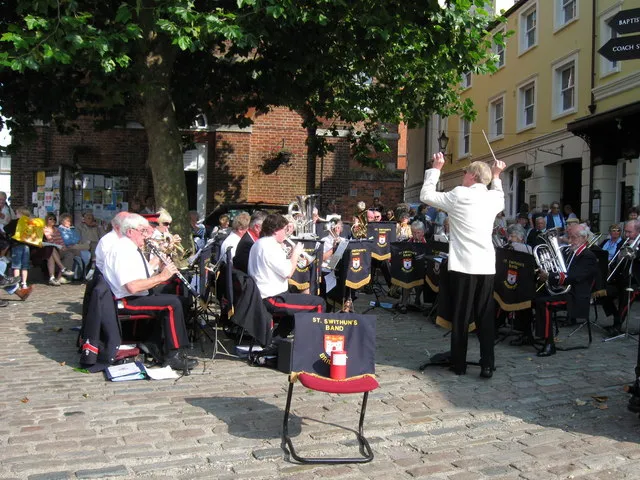
Photo: Derek Voller, CC BY-SA 2.0, via Wikimedia Commons
There is a sentence you hear in pubs all over Blyth, and it usually arrives with a shrug: there is a band on later. Later. As if live music is a dessert trolley that might still be doing the rounds when you are ready. As if the band is there to fill the gap between the last round and the taxi. It is a strange way to treat the best thing in the room.
Live music is not a warm-up for the rest of the night. It is the reason the night has a shape. A good small-room gig gives a group something to arrive for, something to talk about, and something to remember that is not just the price of a pint. Put the band in the middle of the evening and the whole thing clicks. Put it at the end and you are asking people to stay past the point where they have already started saying their goodbyes.
A band is not a garnish
A live act is not background music with better lighting. It changes the room. People turn their chairs. Conversations split and then re-form around the songs. The bar gets a little busier before the set and a little quieter during it. Even the people who came in saying they were only having one drink tend to stay for the first few songs, because a band gives the night a focal point.
That focal point is worth protecting. In a small venue, the band is close enough to be part of the crowd rather than a distant spectacle. You can see the drummer counting in. You can hear the singer laugh at a missed cue. That closeness is not a limitation; it is the whole point. Big venues give you scale. Small rooms give you a night out.
Small rooms do the heavy lifting
Blyth is not short of places to stand in front of a screen and shout at a football match. What it needs more of is rooms where a local band can set up, play two sets, and make a Tuesday feel like a Saturday. Small-room gigs are where music scenes actually happen. They are where you see a band for the price of a pint and a bit of goodwill, and where you can tell your friends you saw them before they got good.
At Bar 38, the size of the room works in the music's favour. There is no bad sightline because there is no distance to speak of. The crowd is close, the sound is direct, and the atmosphere does not have to be manufactured. When a band starts in a room like that, you do not get the arena hush. You get the pub hush — the moment a hundred small conversations stop at once because something is actually happening.
What happens to a crowd when the first chord lands
Watch a bar crowd when a band starts. There is a little ripple. People put their drinks down. Someone says oh, they are good. Someone else says I did not know they were on. The phones come out for a photo, then go away again. The table that was talking about work starts talking about the song. The night has found a centre.
That is the argument for live music in the middle of the evening. It gives the night a natural lift just when the first round has worn off and the second round has not quite arrived. It breaks the evening into chapters. Before the band, you are settling in. During the band, you are somewhere else. After the band, you have something to talk about. That is a much better structure than drink, drink, drink, taxi.
Put the gig in the middle, not the end
The trouble with the phrase there is a band on later is that later is where nights go to die. Later is when people are tired, when the last bus is a real consideration, when the group has already split into the ones who are staying and the ones who are not. If the band is the last thing on the schedule, you are asking a lot of a crowd that has already been out for four hours.
Put the band in the middle and everything gets easier. Arrive early enough to get a drink and a seat. Catch the first set while you are still fresh. Stay for the second set if you are enjoying it. Then decide what happens next. The music becomes the anchor of the night rather than an afterthought. You do not have to stay out until midnight to feel like you have had a proper night out. You just have to be in the room when the band is on.
How to catch music at Bar 38 without making it a late one
First, check what is on before you go. A quick look at the listings or a message to the bar saves you from turning up on the wrong night. Second, treat the start time as the start time. If the band is on at eight, be there at half seven. That gives you time to order a drink, find a spot and settle in without missing the first song.
Third, order before the set starts. Nobody wants to be at the bar when the room is quiet and the singer is telling a story. Get your round in early, and keep it simple during the set. Fourth, sit or stand where you can see but not where you have to shout. A small room means you do not need to be front and centre to feel part of it. Fifth, respect the quiet bits. A bar crowd that listens is a bar crowd that gets asked back.
Finally, give yourself permission to leave on a high. You do not have to stay until the lights go up. Catch the set, have one more drink, and go. A night out with live music in the middle is not a marathon. It is a good few hours with a proper centre.
The local bit matters
The best thing about live music in a place like Blyth is that it is local. The band is probably from down the road. The person selling merch might be the drummer's mate. The songs might mention a street you know. That kind of night cannot be streamed. It has to be attended.
So next time you are planning a night out, do not save the band for later. Build the night around them. Put the gig in the middle, bring the people who always say they never know what is on, and let the room do the rest. Live music is not the warm-up. It is the night.