The Box Has the Floor: Why Blyth's Best Nights Are Chosen One Song at a Time
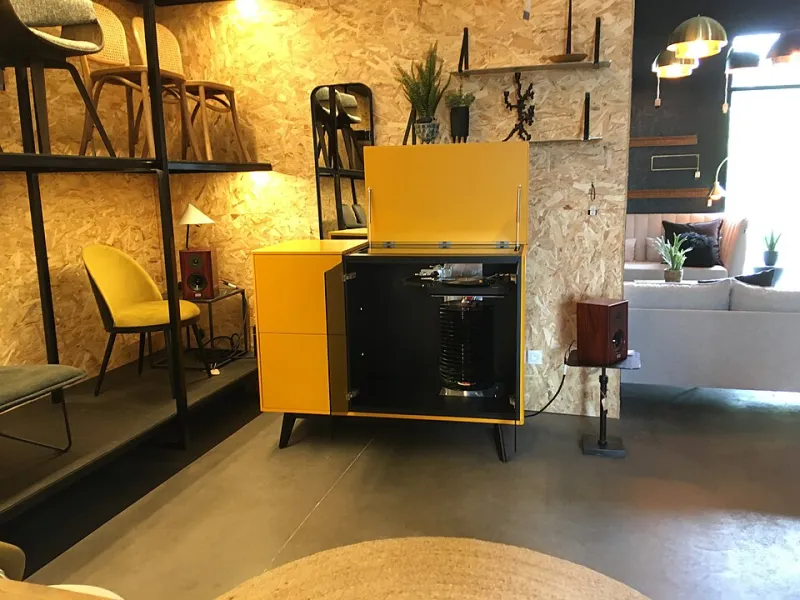
Photo: Baalgor41, CC BY-SA 4.0, via Wikimedia Commons
There is a moment in every good night out when the music stops being scenery and becomes a decision. At Bar 38, that moment often arrives near the jukebox: someone stands up, scrolls, hesitates, looks back at the room, and presses a button. For the next three minutes, the bar has a new mood. That is not a small thing. It is the whole point.
A jukebox is often described as a bit of fun, a coin-operated novelty, something to lean on while you wait for the next round. But in a local bar it is closer to a social contract. You put something in; you get something back. Not just a song, but a reaction. A nod from the corner. A groan from the bloke at the bar. Someone singing the wrong line with total confidence. The night becomes a shared thing rather than a playlist somebody else arranged in advance.
The three-minute democracy
A preset playlist is efficient. It is also a bit like being handed a conversation someone else has already had. It cannot know that the group by the window has just ordered a second round and needs something with a bit of bounce. It cannot know that the couple in the corner are having the sort of quiet catch-up that needs a softer backdrop. It cannot know that the whole room is ready to belt out a chorus.
The jukebox can. Not because the machine is clever, but because the people feeding it are. Everyone gets a vote, nobody gets a veto, and the result is a night that belongs to the room rather than the algorithm. That is the three-minute democracy in action. It is imperfect, occasionally chaotic and all the better for it.
Reading the room is part of the night
Choosing a song in a bar is not the same as choosing one on your headphones. There is context. There is timing. There is the small matter of eleven other people who have to live with your decision. The unwritten rules are not complicated, but they do exist.
First, look around before you look at the screen. Is the room loud and loose, or quiet and mid-conversation? Is there a birthday table, a post-match crowd, a first date, a group who have clearly not seen each other since the summer? The right song at the wrong moment is still the wrong song.
Second, think in rounds, not in marathons. One great track and then back to your seat is usually more welcome than five in a row from the same artist. A jukebox is a shared stereo, not a personal audition tape. The best selections feel like a contribution, not a broadcast.
The takeover is real — and it is usually one person
We have all seen it. The one-person takeover. Someone finds the machine, finds the search function, and suddenly the next twenty minutes are a concept album. It starts as enthusiasm and ends as a hostage situation. The room does not revolt, because this is a bar in Blyth, not a parliament. People just get quieter, order another drink, and wait for it to pass.
The takeover is rarely malicious. It is usually just excitement. But it ignores the first rule of the box: the night is bigger than your mood. If you would not stand on a chair and talk over everyone for twenty minutes, you probably should not do the musical equivalent. A couple of strong choices is a gift. A full queue is a monologue.
Handing over the aux is a social skill
The phrase gets used loosely — who gets the aux? — but in a bar it means something simpler: knowing when to step back. The best jukebox users are not the ones with the most encyclopaedic taste. They are the ones who can read when the room has had enough of one sound and is ready for another.
That means handing over the moment. It might mean letting the person who has been hovering near the machine take the next go. It might mean choosing something that suits the group rather than the individual. It might mean admitting that your beloved album track is not going to land at half eleven on a Saturday. There is no shame in that. The jukebox is not a test of taste. It is a test of timing.
Why the preset playlist always loses
A background playlist is safe. It does not offend, it does not surprise, and it does not ask anything of anyone. That is also its problem. The nights people remember are rarely the ones where the music was perfectly unobtrusive. They are the ones where someone picked a song nobody expected, and the room briefly became a single thing.
The jukebox gives a Blyth night out that little spark of unpredictability. It lets a quiet regular become the person who chose the tune everyone is still talking about an hour later. It lets a group of mates build a soundtrack in real time, with all the daft disagreements and last-minute changes that involves. It is more sociable because it is more human.
The jukebox is a conversation with a bassline
At Bar 38, the bar is not just a place to sit. It is a room full of people making small choices that add up to a night. The jukebox is one of those choices. It is a nudge, a joke, a peace offering, a celebration. It is someone saying, without saying it, here is what I reckon we need next.
So the next time you find yourself near the box, take a second. Read the room. Pick something that gives more than it takes. Then hand the floor to someone else. The best Blyth nights are not the ones with the perfect playlist. They are the ones where everyone gets a turn.